As artificial intelligence changes how people learn, work and communicate, an important question is emerging: are girls being given the knowledge, skills and opportunities to participate in this transformation?
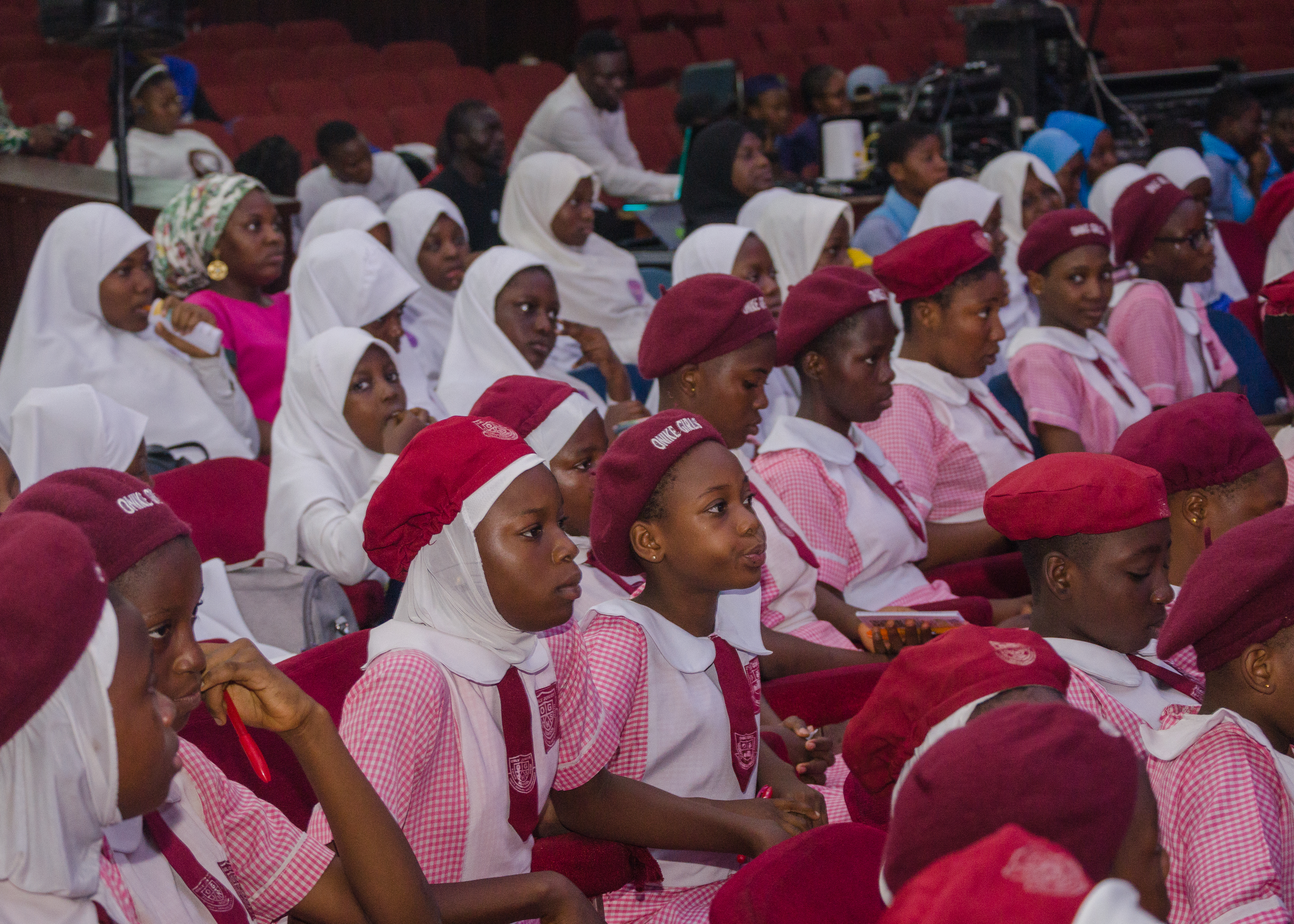
That question shaped HACEY’s 14th Girl Child Summit, held under the theme “Girls, AI and the Future.” Through school engagements, an essay competition and a one-day convening in Lagos, the 2026 edition reached 2,000 adolescent girls across Cross River, Adamawa, Anambra, Kwara, Kaduna and Lagos States.
Held annually in commemoration of the International Day of the Girl Child, the summit continues a tradition HACEY began in 2012: bringing girls together with partners, educators, policymakers and other stakeholders to address issues affecting their lives and create opportunities for their development.
This year’s focus was artificial intelligence and what it would take to ensure girls are not left behind as the technology becomes increasingly influential.
Why AI, and Why Girls?
Artificial intelligence is creating new opportunities in education, research, creativity, innovation and career development. For girls, understanding how to use these tools could open new possibilities for learning, problem-solving and participation in the digital economy.
However, access to technology also comes with challenges. Misinformation, deepfakes, privacy violations, cyberbullying, online exploitation and algorithmic bias raise important questions about how girls can navigate digital spaces safely and responsibly.
For HACEY, addressing these opportunities and risks together was central to the summit.
“Five years ago, AI was not the mainstream, just like how technology was only for a few who could afford it or who could access it,” said Rhoda Robinson, Executive Director of HACEY. “And now we are moving into an age where AI is incorporated into every part of our existence, and we cannot afford to leave girls behind at this point.”
“Girls need to be at the forefront of the AI race, of understanding AI, of understanding its use, its applicability and the harm it can do if not applied appropriately,” Robinson added.
The summit therefore aimed to go beyond introducing girls to AI. It focused on practical applications, critical thinking, digital safety and the importance of ensuring that girls can use technology confidently, responsibly and creatively.
From Classrooms to the Girl Child Summit
The engagement began before the Lagos convening, with school-based sessions across five states.
In secondary schools in Cross River, Adamawa, Anambra, Kwara and Kaduna, girls were introduced to AI tools, effective prompting and the safe and ethical use of technology. The sessions explored how AI could support learning, research, creativity and problem-solving while encouraging participants to consider challenges in their communities that technology might help address.
An essay competition provided another opportunity for girls to express their ideas. Participants explored how technology could shape the future, with outstanding entries recognised and winners receiving prizes at the Lagos summit.
These activities set the stage for the one-day convening, which brought together girls, policymakers, educators, media representatives and other stakeholders for conversations under the sub-theme “Truth in the Age of AI: Media Literacy and Digital Integrity for Girls.”
As AI-generated content becomes more sophisticated, the ability to question information, verify sources and recognise manipulated content is increasingly important. These concerns shaped discussions throughout the day.
Participants explored practical applications of AI through demonstrations on prompting for learning and research. A panel discussion examined misinformation, deepfakes, online safety, privacy, bias and responsible content creation, while a fireside chat titled “Staying Safe, Smart and Authentic Online” addressed consent, cyberbullying and protecting one’s digital identity.
The conversations were not limited to presentations from experts. Girls questioned panellists directly, shared their experiences of technology and social media, and reflected on the challenges they encounter online.
Through the Girl Voices segment, selected participants also shared what they had learned and how they hoped to apply technology in their education and everyday lives.
Their participation reinforced one of the summit’s central messages: conversations about the future of technology must include the girls whose lives it will influence.
Partnerships That Make the Work Possible
The 14th Girl Child Summit was made possible through the support of partners who share HACEY’s commitment to advancing girls’ education, rights and opportunities.
Access Holdings Plc, a long-standing partner of HACEY, hosted this year’s convening at its headquarters in Lagos.
“For us here at Access Holdings, it is really essential for us to be able to partner with HACEY for the Girls Summit, and partnering with them helps us to be able to meet two critical SDG goals, goals 4 and 5, for quality education and gender equality,” said Ayodeji Lawal, Head of Sustainability at Access Holdings Plc.
The partnership reflects the importance of collaboration in expanding opportunities for girls, particularly as digital skills become increasingly relevant to education and employment.
HACEY also acknowledges the continued support of Empower UK through the PAVE Project, which works to improve girls’ access to psychosocial support, vocational skills training and health services.
Together, these partnerships contribute to HACEY’s broader efforts to address the barriers girls face and support their development beyond individual events.
Beyond the Summit: Sustaining Girls’ Participation
The summit also marked two important milestones: the launch of the PAVE Girl documentary and the inauguration of new members of the HACEY Girl Advisory Board.
The documentary brings attention to the experiences of girls reached through PAVE, while the Girl Advisory Board provides a platform for emerging female leaders to share their perspectives and contribute insights to programmes designed around girls’ needs.
Both initiatives reflect an important part of HACEY’s approach: girls should not only participate in programmes but also have opportunities to influence the conversations and decisions that affect their lives.
The 2026 summit introduced participants to practical uses of AI, encouraged discussions about digital safety and created opportunities to explore technology-related careers and innovation. However, ensuring that girls can benefit from these opportunities requires continued access to learning, mentorship and supportive environments.
For Robinson, the next step is ensuring that AI becomes useful to girls beyond social media and occasional exposure to digital tools.
“We need to create an environment where girls are able to access AI and they can productively use it in everyday life, so we are looking at AI moving out of social media and into the spaces where girls need it the most: in accessing learning, in accessing skills, in accessing the way that they are able to contribute to how policies are made, to how decisions are made in their societies, and to how they can make choices regarding their future,” she said.
“Today’s event is a culmination of our joint effort in ensuring that girls have a platform to stand and that their voices are not smothered in the race for AI.”
Since 2012, the Girl Child Summit has provided a platform for advancing conversations and action around girls’ health, rights, education and economic empowerment.
The 14th edition brought a new dimension to that work by examining how artificial intelligence could influence the opportunities available to the next generation of girls.
As AI continues to shape Nigeria’s future, the question is no longer simply whether girls will use the technology. It is whether they will have the knowledge, opportunities and influence to shape how it is developed and applied.
For HACEY, ensuring that girls have a voice in that future remains part of the work ahead.